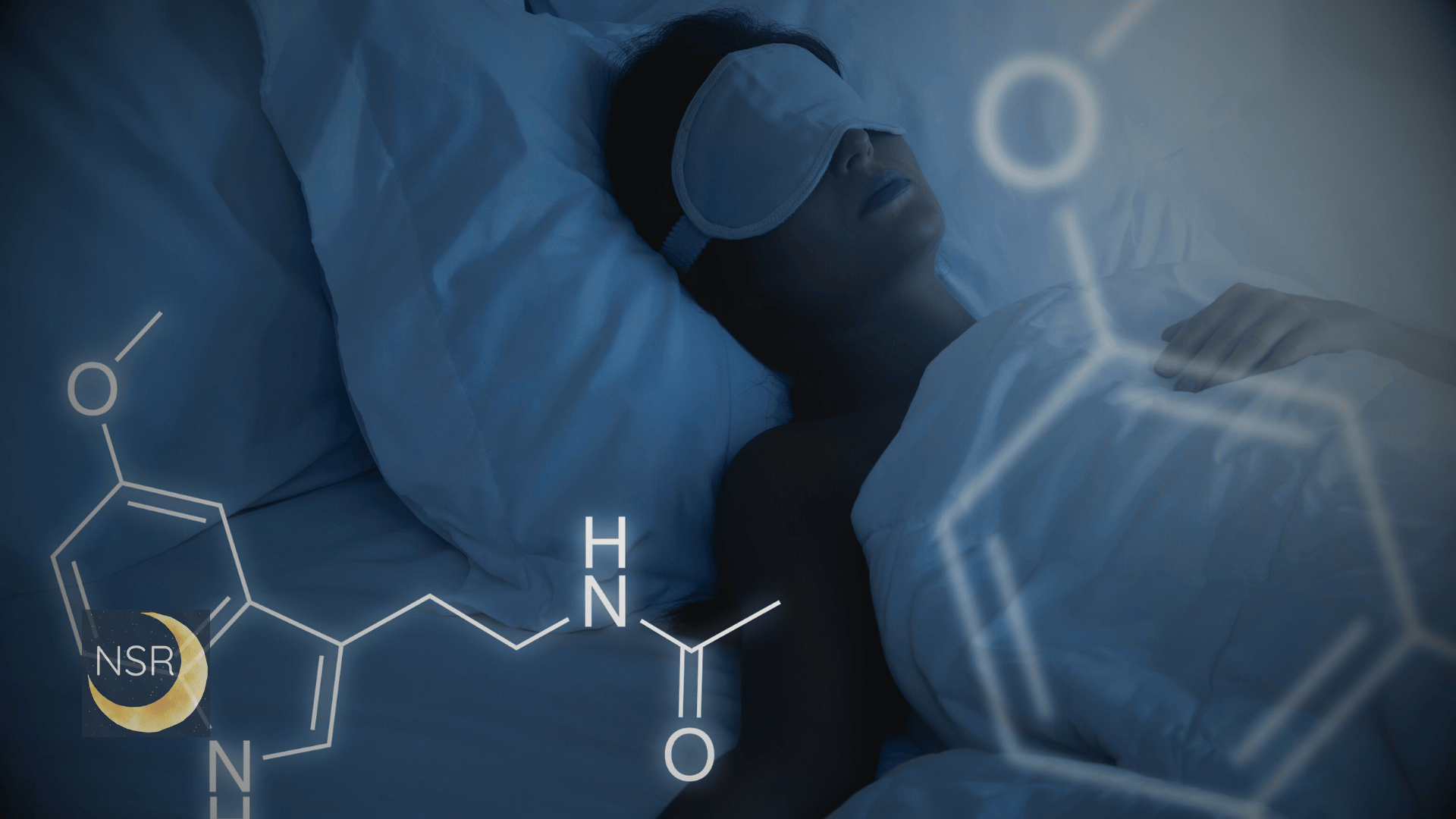
We’ve all been there: staying up late, eating too much over the holidays, feeling out of our routine for weeks on end. January 1st arrives and we promise ourselves we’ll go to bed early, be consistent with waking up, and finally fix our broken sleep schedule. But by mid-January, most of us are back to our sleepless patterns, frustrated and convinced we don’t have the discipline for good sleep.
There’s one part of this scenario no one really talks about: Good sleep isn’t about discipline. It’s about biology.
When you try to force a sleep schedule change, you’re fighting against millions of years of circadian evolution. Your body’s internal clock doesn’t reset on command. It shifts gradually and responds to specific environmental cues in predictable ways.
If you push too hard, too fast, without prepping your body for rest, you’ll trigger a rebound effect that leaves you lying awake and probably more frustrated and tired.
This two-week sleep protocol isn’t about discipline. It’s built on chronobiology research, and it works with your circadian system rather than against it. Over 14 days, you’ll gradually shift your sleep-wake cycle using the same techniques sleep researchers use in clinical settings. No willpower required. You just need strategic timing and consistency.
A quick note before we dive into the science: if you have symptoms of sleep apnea, ask your physician for a sleep study to rule out any potential underlying issues.
Why Forcing a Sleep Schedule Backfires
Most people don’t deliberately stay up late. Your sleep schedule drifts later and later through a phenomenon called social jetlag. That’s the mismatch between your biological clock and your social obligations. Late-night social events, weekend sleep-ins, evening screen time, and inconsistent work schedules all push your internal clock later into the night. Over time, your circadian rhythm can lose its calibration and you may find it harder and harder to fall sleep.
Your circadian system operates on two competing forces: circadian timing (when your body thinks it should sleep) and homeostatic sleep pressure (how long you’ve been awake). Research published in the Journal of Biological Rhythms describes this as the “two-process model” of sleep regulation. When these two systems are misaligned or fall out of sync, you get the classic scenario of being exhausted but unable to fall asleep.
That’s why “just go to bed earlier” doesn’t work. If your circadian clock thinks it’s 3 PM (biologically speaking) when you climb into bed at 10 PM, you don’t have enough sleep pressure built up to override your mental awareness. You’ll lie there, frustrated, which triggers arousal and stress hormones—the exact opposite of what you need.
Most people will stay awake, then sleep in the next morning to compensate, which further delays their circadian phase. It’s a self-reinforcing cycle.
The solution is strategic phase shifting. Here’s how to do it in two weeks.
The Pre-Reset Audit (Days 1-2)
Before you change anything, you need data. Spend two days tracking your natural sleep and wake patterns without judgment. There is no right or wrong, you’re just observing.
Track these metrics:
- Actual lights-out time (when you’re actually trying to sleep, not when you get into bed)
- Sleep onset time (when you actually fall asleep—estimate if needed, or use a sleep tracking device like an Oura ring or smart watch)
- Wake time (when you naturally wake or when your alarm goes off)
- Any middle-of-night awakenings
- How you feel in the morning (1-10 scale)
- When you feel most alert during the day
Now set your target. Be realistic. If you’re currently waking at 9 AM and need to wake at 6 AM, that’s a 3-hour shift—achievable, but it will take the full two weeks. If you’re only adjusting your sleep schedule by 30-60 minutes, you may feel results in a week.
Critical advice: Don’t try to shift more than 2 hours from your current pattern in only one or two weeks. Larger shifts require a more gradual shift.
The 2-Week Reset Protocol
Week 1: Anchor Your Wake Time
It might sound counterintuitive, but the key to resetting your sleep schedule is focusing on your wake time.
Your wake time is what chronobiologists call the strongest “zeitgeber” (time-giver) for your circadian system. A consistent wake time, paired with morning light exposure, is the anchor that allows everything else to fall into place.
Days 1-3: The First Shift
Set your alarm for 15-30 minutes earlier than your current average wake time. Yes, even on weekends. Consistency is non-negotiable during the reset phase.
The moment your alarm goes off, get some sunlight. Ideally, go outside within 30 minutes of waking. Even on cloudy days, outdoor light provides 1,000-10,000 lux, significantly more than indoor lighting (typically 100-300 lux). If outdoor exposure isn’t possible, use a 10,000-lux light therapy box for 20-30 minutes while having coffee or breakfast. They’re typically less than $40 and worth the investment if you have to wake before sunrise.
Why does light matter? Your eyes contain specialized photoreceptors called melanopsin cells that are sensitive to blue wavelengths in the 460-480nm range. Research published in Cell demonstrates that these cells communicate directly with your suprachiasmatic nucleus (SCN)—your brain’s master clock—triggering a cascade of hormonal changes that promote alertness and help manage your circadian system.
Morning light does two things: it suppresses residual melatonin (making you feel more awake) and it starts a countdown timer for melatonin release 14-16 hours later. If you get light at 7 AM, your body will naturally start producing melatonin around 9-11 PM.
Do not nap during the first three days, no matter how tired you feel. You’re building sleep pressure—the homeostatic drive that will help you fall asleep earlier. According to research from the Sleep and Circadian Neuroscience Institute at Oxford, even a 20-minute nap can reduce sleep pressure enough to delay sleep onset by 1-2 hours that night.
Evening Protocol
Starting on Day 1, implement an evening dimming routine. After 8 PM (or 3 hours before your target bedtime, whichever comes first):
- Switch all overhead lights to soft lamp lighting
- Use amber or red-tinted bulbs (avoid blue-white LED)
- Enable night mode on all devices (reduces blue light by 50-90%)
- Use blue-blocking glasses if you must use screens or only have LED lighting
A study in the Journal of Sleep found that evening light exposure—even from tablets and e-readers—suppresses melatonin by up to 55% and delays circadian phase by 1.5 hours. You’re fighting biology when you scroll bright screens. Use blue-blocking glasses after 8 PM to help offset exposure.
Days 4-7: Stabilization
Maintain the same wake time and try to go to bed earlier, if possible. Your body is adapting. You may feel slightly sleep-deprived; that’s what you’re aiming for. That accumulated sleep pressure makes it easier to fall asleep at night.
Add these elements:
- Caffeine cutoff: No caffeine after 2 PM (caffeine has a half-life of 5-6 hours, which means that afternoon coffee is still 25% active at bedtime)
- Movement window: Exercise lightly between 4-7 PM to raise your core body temperature; the subsequent drop 2-3 hours later should promote sleepiness
- Protein at breakfast: Research suggests that food timing can influence circadian rhythms; a protein-rich breakfast can help anchor your wake phase
Don’t force an earlier bedtime if you’re not feeling tired. When you naturally feel sleepy (not just tired, actually ready to sleep), go to bed. You might not be falling asleep much earlier yet. That’s fine. Your schedule is consolidating.
Week 2: Consolidate the Schedule
Days 8-10: The Second Shift (If Needed)
If your target requires it, make another 15-30 minute adjustment to your wake time. Continue the morning light exposure—this is still your primary zeitgeber.
By now, you should notice your natural bedtime drifting earlier. If you’re still lying awake at your desired bedtime, your circadian system needs more time. Don’t panic. Continue the protocol. It may take more time for your body to adjust, and that’s ok.
Add sleep pressure tools:
- Avoid lying in bed awake. If you’re not asleep within 20-25 minutes, get up and do something boring in dim light until you feel sleepy. Research on stimulus control therapy shows that associating bed only with sleep (not wakefulness) is crucial for falling asleep faster
- Keep your bedroom cool (65-68°F/18-20°C). Your core body temperature must drop for you to fall sleep; you can also take a hot shower right before bed to give your temperature a quick drop
- Use a “boring wind-down” routine: 60 minutes before bed, engage in genuinely boring activities—read something non-stimulating, stretch gently, listen to ambient music or try a guided meditation
Days 11-14: Fine-Tuning and Stabilization
By the end of week two, your circadian rhythm should be substantially shifted. You should be waking more easily, feeling sleepy earlier, and (hopefully) falling asleep within 20 minutes of lights-out.
Troubleshooting middle-of-night awakenings: Brief awakenings (5-15 minutes) are normal and occur 4-6 times per night as you cycle through sleep stages. If you’re awake longer than 20 minutes, get up and try a boring activity. The worst thing you can do is lie there checking the clock, thinking about how much sleep you’re missing.
The Science Behind Why This Works
Let’s examine why this protocol works when “willpower” doesn’t.
Light Timing and Phase Response Curves
Your circadian system doesn’t respond to light the same way at all times of day. Research on phase response curves reveals that:
- Light exposure in the early morning (roughly 4 AM-10 AM) advances your phase—it shifts your clock earlier
- Light exposure in the evening (roughly 8 PM-2 AM) delays your phase, or shifts you later
- Light exposure during the biological day (mid-morning to late afternoon) has minimal phase-shifting effects
This is why morning light is your most powerful tool for shifting your sleep earlier, while evening light exposure sabotages your efforts.
Why Gradual Shifts Work
Your SCN adjusts at a rate of about 1-2 hours per day under ideal conditions. Push harder than this, and you’re essentially putting yourself in jetlag. By shifting your sleep schedule in 15-30 minute increments every 3-4 days, you respect your biology’s adaptation capacity while still making meaningful progress.
Research on shift work adaptation found that gradual schedule transitions resulted in better sleep quality, less fatigue, and higher adherence rates compared to abrupt changes.
Making It Stick Beyond Two Weeks
Congratulations! Once you’ve completed the reset, the hard part is done. Now comes maintenance, which is easier than the initial shift.
The 80/20 Rule: You don’t need perfect consistency forever. Research on social jetlag suggests that maintaining your schedule 5-6 nights per week is sufficient to keep your circadian system entrained. This means you can have one or two late nights per week without completely derailing your progress.
Social Buffer Strategies:
- Late events: If you’re out past your bedtime, still wake at your regular time the next day (even if you get less sleep). One short night won’t undo your reset, but sleeping in will
- Travel across time zones: Use the same gradual shifting approach 3-4 days before departure
- High-stress periods: Your schedule might drift slightly, and that’s normal. Use a condensed 3-4 day version of this protocol to realign
Troubleshooting Common Problems
“I’m awake but exhausted in the morning”
This likely points toward a sleep debt rather than circadian misalignment. You’re waking at the right circadian time, but you haven’t been getting enough total sleep.
Solution: Gradually move your bedtime earlier (now that your wake time is anchored) to increase total sleep. Most adults need 7-9 hours. If you’re waking at 6:30 AM and need 8 hours, you should be asleep by 10:30 PM. Not just in bed, actually asleep, so work backward from there.
“I lie awake for hours at my new bedtime”
You shifted too aggressively or you’re going to bed before sufficient sleep pressure has built.
Solution: Stay up 15-30 minutes later for 3-4 nights. Only go to bed when you’re genuinely sleepy (heavy eyelids, difficulty focusing, spontaneous yawning). Over time, as your circadian rhythm fully shifts, this sleep window will move earlier.
“I feel great but my partner’s schedule is opposite”
Couples often have different chronotypes—one lark, one owl. In fact, some research suggests this is more common than matching schedules.
Solutions: Separate bedtimes with a quiet reunion routine, sleep masks and earplugs for the early sleeper, agreement on one “synced” night per week to maintain connection. Your health is too important to sacrifice for schedule matching.
“My work schedule is chaotic”
Shift workers and people with irregular schedules face unique challenges. You can’t maintain a perfect schedule, but you can create anchor points.
Maintain the most consistent wake time possible on days off, use strategic light exposure (bright light during your “day” regardless of clock time, darkness during your “night”), and consider melatonin supplementation (0.5-3mg) 30 minutes before your scheduled sleep time (consult a physician first). The goal isn’t perfection, it’s minimizing circadian disruption where possible.
Your New Sleep Schedule Starts Tomorrow Morning
Not tomorrow night—tomorrow morning. That’s the key insight from chronobiology: your sleep schedule is controlled by when you wake and expose yourself to light, not by when you lie down in the dark hoping to fall asleep.
This protocol works because it respects your biology. It doesn’t rely on willpower or discipline. It relies on consistent environmental cues that your circadian system is designed to respond to. Give it two weeks. Follow the protocol as outlined. Track your progress without judgment.
Small daily wins compound. A 15-minute shift feels insignificant on Day 1, but by Day 14, you’ve reclaimed hours of high-quality sleep and established a sustainable routine. Unlike New Year’s resolutions that rely on motivation (which fades), this creates a biological foundation that sustains itself.
Sleep well, friend. You’re not fighting your body—you’re working with it.